Showing posts with label this week. Show all posts

Sunday, December 8, 2013

This Week: 12/8-15

Horace, Roman lyric poet and critic, born 65 B.C. (d.8 B.C.)

John Milton, England's greatest Puritan Poet-- one of the greatest of the world-- born 1608 (d.1674)

Massachusetts Bay Colony organizes militia units into three regiments-- celebrated as the birth of the National Guard 1636

John Jay, first Chief Justice of United States Supreme Court, born 1745 (d.1829)

Eli Whitney, inventor of the cotton gin born 1765 (d.1825) 

The Bill of Rights as passed by Congress was ratified by the states 1791
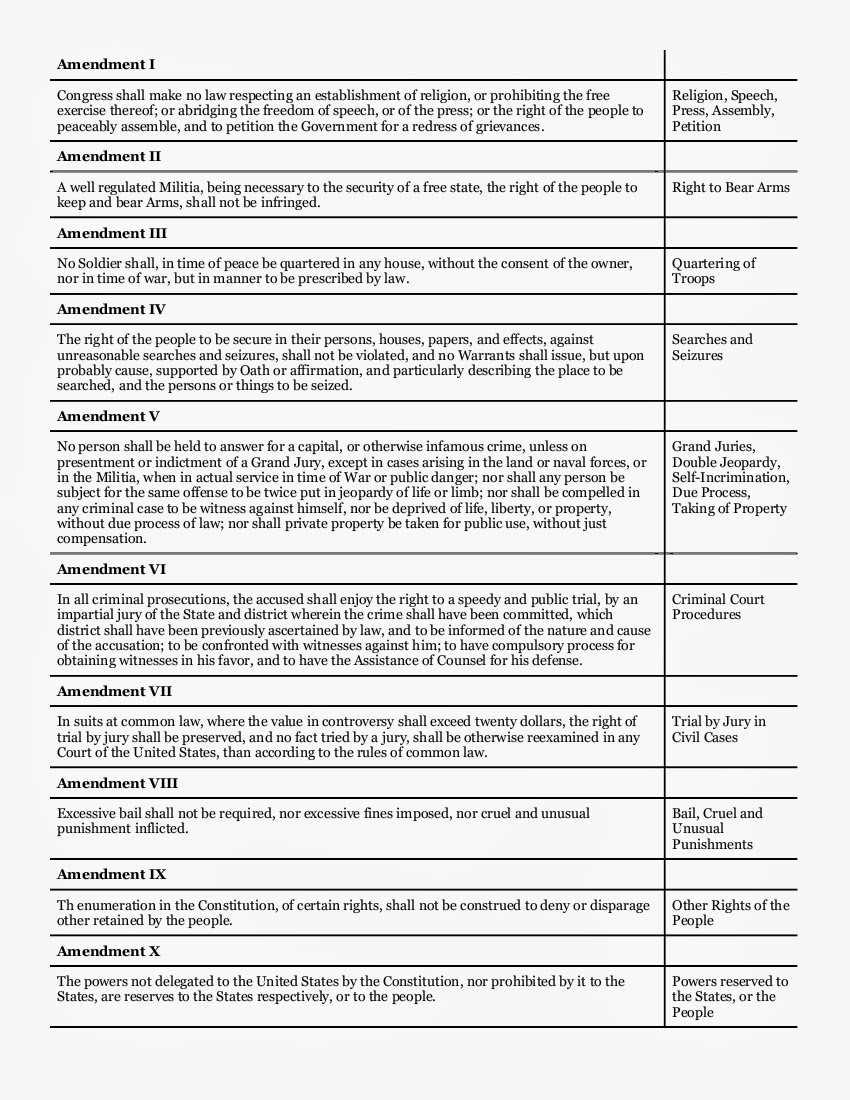
No. We are not smarter than we were 222 years ago.
George Washington died at Mount Vernon 1799


Washington, D.C. became permanent home of the United States Government 1800

Mississippi admitted to the Union 1817 (20th state)

Emily Dickinson, New England poet, born 1830 (d.1886)

Robert Koch, German physician, founder of bacteriology and winner of Nobel prize, born 1843 (d.1910)

Melvil Dewey, librarian and author of the decimal system of book classification, born 1851 (d.1931)

Alfred Albert Nobel, Swedish chemist, inventor of dynamite, founder Nobel prizes, died 1896 (b.1833)

Gone with the Wind premiers in Atlanta 1939

The Chicago Bears defeat the Washington Redskins 73-0 1940

Congress declares war on Japan 1941

NASCAR founded 1947

Last person to walk on the moon 1972

Cobbled together from

Mary Emogene Hazeltine. Anniversaries and Holidays: A Calendar of Days and How to Observe Them. American Library Association, Chicago. 1928.

Mary E. Hazeltine. Judith K. Sollenberger, ed. Anniversaries and Holidays: A Calendar of Days and How to Observe Them Second Edition, Completely Revised. American Library Association, Chicago. 1965.

William J. Bennett and John T.E.. Cribb. The American Patriot's Almanac. Thomas Nelson, Nashville. 2008.

Tuesday, October 1, 2013

Stanely Miles

It's funny the connections we humans make when we live a Big Life filled with family & friends  & books & The World-Wide-Web, isn't it? 

I noted a few things that happened this week in history and here's what Daughter C had to say in the comments:
This is what I've been trying to think of:

Linus van Pelt: In the year 1621, the Pilgrims held their first Thanksgiving feast. They invited the great Indian chief Massasoit, who brought ninety of his brave Indians and a great abundance of food. Governor William Bradford and Captain Miles Standish were honored guests. Elder William Brewster, who was a minister, said a prayer that went something like this: "We thank God for our homes and our food and our safety in a new land. We thank God for the opportunity to create a new world for freedom and justice."


Patricia 'Peppermint Patty' Reichardt: Amen.


Sally Brown: Do you know what we have to do? We have to write an essay on Stanley Miles.

Charlie Brown: You mean Miles Standish.


Sally Brown: I can't keep track of all those names.

A Few More Words

I found a few more words for one of this week's birthday boys---

Rutherford B. Hayes, our 19th President, (1877-1881).
Hayes was an upright, conscientious, and better-than-average President, but the professional politicians of the Republican party disliked him, and his wife's refusal to serve wine at White House dinners brought ridicule from Washington society. He was uneasy in the presidency, and, alone of presidents since Polk, absolutely refused to be considered for a second term.
(Samuel Eliot Morison, The Oxford History of The American People, Oxford University Press, New York, 1965. Photograph from Theodore E. Burton, American Statesmen, Second Series: John Sherman, Houghton Mifflin Company, 1908.)

Turns out-- and everyone I'm reading says Hayes knew nothing of this-- Hayes' election was "stolen!" 

The election results from four states were disputed because each had submitted two sets. Three of theses states, South Carolina, Florida, and Louisiana were still under carpet-bagger rule and the carpet-bagging election boards had thrown out thousands of votes for Samuel Tilden, the Democratic candidate. Guess what Congress did to fix the problem? That's correct. A commission was formed! Here's Morison:
"'Visiting statesmen' were sent to the disputed Southern States; and there seems no doubt that a deal was made by the Republican and Southern Democratic leaders, by virtue of which, in return for their acquiescence in Haye's election, they promised on his behalf to withdraw the garrison and to wink at the non-enforcement of Amendment XV... ."
Article XV:
The right of citizens of the United States to vote shall not be denied or abridged by the United States or by any state on account of race, color, or previous condition of servitude.
So there you have a few more words.

Monday, September 30, 2013

This Week 9/30 - 10/6: Birthdays

This week is Kat's Birthday week. From my point of view, the only two weeks that are as important as this week are the weeks that envelope 3/12 and 4/7. Oh. and one or two in December.

~~

And now to the history.

Two executions in one week.

1183 St. Francis of Assisi born (d.1226) [1]

1536 William Tyndale executed (b.1492?) "English reformer, martyr, and translator of the Bible, 1525. [1]
I am not so sure I'd want to have my life summed up in eight words. There was a lot more to Tyndale than eight words. When he fled to Germany, he met with Martin Luther. He was tried for heresy, found guilty, was strangled and burned at the stake. 
1656 Miles Standish died (b.1584) "English colonist at Plymouth... ." [2]

1703 Jonathan Edwards born (d.1758.) "Author of Freedom of the Will (1754) which 'for clear insight, originality, and solid reasoning is unsurpassed in American literary annals.'" [2]
Edwards was one of the leaders of The Great Awakening, "the religious revival that swept the colonies in the 1730's and '40s." This was the first mass movement in America, and it emphasized many democratic themes, for example, "all people stand equal in the eyes of God." [3]
1780 Joseph André executed (b.1751) [1]
If that name sounds vaguely familiar to you, go to the head of the class. André was a friend of "the beautiful Peggy Shippen" [3] and a participant in an act of moral turpitude.
1822 Rutherford B. Hayes born 19th President of The United States (d.1893) [1]
Heh. He doesn't even get eight words. I'll see if I can find him a few more if I have a chance later today or tomorrow. I mean, it's his birthday week, after all. The guy deserves a few more words.
1846 George Westinghouse born (d.1914) "Engineer and inventor of the air-brake, patented in 1869 [1]

1858 Michael Idvorsky Pumpin born (d.1935) Eminent American electrical scientist, inventor, and teacher. Born in Serbia. ... Awarded the Pulitzer Prize in 1924 for his autobiography From Immigrant to Inventor. [2]
Who was I reading about just the other day? A wonderful tale of a little Jewish kid going from abject poverty and persecution in the late 1900s in Russia to fame and riches in America. Ran away at 14. Played spoons on street for change. Was a singing waiter in New York. Wrote a few tunes, some remembered to this day. One, a patriotic little tune, made a heap of money. But, "refusing to capitalize on his patriotism" this songwriter donated every red cent to the Boy & Girl Scouts! Irving Berlin. God Bless America! [5]

1868 Louisa May Alcott published Little Women [3]

1869 Mohandas Ghandi born "Hindu Nationalist leader and social reformer." [2]

1927 Mt. Ruchmore begins [3]

September 30, 1946-- At Nuremberg, after one of the greatest trials of all time, all of the twenty-one defendants have been found guilty. [4]

October 2, 1947-- The Jewish Agency for Palestine announced that it accepts teh United Nations plan for dividing the Holy Land into separate Arab and Jewish states.
The Arabs have announced their intention to drench the entore Middle East in blood before permitting the partitioning of Palestine. [4]

1950 Peanuts first published [3] 

1996 Agnes Gonxha Bojaxhiu Mother Teresa receives honorary citizenship. Other honorary citizens are Churchill (1963), Raoul Wallenberg (1981), William and Hannah Penn (1984), The Marquis de Lafayette (2002) [3]


Also:

Religious Education Week. "First full week in October." [3]

National Busines Women's Week. Generally second week of October. "Sponsored by the National Federation of Business and Professional Women's Clubs to emphasize the important progress made by women during the last hundred years and to widen the horizon for the future." [3]


References
1. Mary Emogene Hazeltine. Anniversaries and Holidays: A Calendar of Days and How to Observe Them. American Library Association, Chicago. 1928.

2. Mary E. Hazeltine. Judith K. Sollenberger, ed. Anniversaries and Holidays: A Calendar of Days and How to Observe Them Second Edition, Completely Revised. American Library Association, Chicago. 1965.

3. William J. Bennett and John T.E.. Cribb. The American Patriot's Almanac. Thomas Nelson, Nashville. 2008. 
 

4. Lowell Thomas. History As You Heard It. Doubleday & Company, Inc., Garden City, N.Y. 1957.

5. David Ewen. Great Men of American Popular Song. Prentice-Hall, Inc., Englewood Cliffs, N.J. 1972

Tuesday, September 10, 2013

This Week: 9/8 - 9/14

9/ 8

Antonin Dvořák, "Bohemian (Czech) composer and teacher" born 1841.
Famous for his symphony From the New World, which he composed while in America, 1892-95.
The New World Symphony is my favorite piece of music. The second movement is especially moving.  I invited Dvořák to dinner.

9/9

William the Conqueror died 1087

California admitted to the Union 1850

9/10

Battle of Lake Erie 1813 (War of 1812)

9/11

O. Henry born 1862.
Distinguished by his perceptions of the romantic aspects of every-day life. 
America attacked 2001


 9/12

Henry Hudson entered the Hudson River 1609

9/13

Walter Reed-- who conquered yellow fever-- born 1851.

9/14

The Star Spangled Banner written by Francis Scott Key in 1814

Read the whole thing:
Oh, say can you see by the dawn's early light
What so proudly we hailed at the twilight's last gleaming?
Whose broad stripes and bright stars thru the perilous fight,
O'er the ramparts we watched were so gallantly streaming?
And the rocket's red glare, the bombs bursting in air,
Gave proof through the night that our flag was still there.
Oh, say does that star-spangled banner yet wave
O'er the land of the free and the home of the brave?

On the shore, dimly seen through the mists of the deep,
Where the foe's haughty host in dread silence reposes,
What is that which the breeze, o'er the towering steep,
As it fitfully blows, half conceals, half discloses?
Now it catches the gleam of the morning's first beam,
In full glory reflected now shines in the stream:
'Tis the star-spangled banner! Oh long may it wave
O'er the land of the free and the home of the brave!

And where is that band who so vauntingly swore
That the havoc of war and the battle's confusion,
A home and a country should leave us no more!
Their blood has washed out their foul footsteps' pollution.
No refuge could save the hireling and slave
From the terror of flight, or the gloom of the grave:
And the star-spangled banner in triumph doth wave
O'er the land of the free and the home of the brave!

Oh! thus be it ever, when freemen shall stand
Between their loved home and the war's desolation!
Blest with victory and peace, may the heav'n rescued land
Praise the Power that hath made and preserved us a nation.
Then conquer we must, when our cause it is just,
And this be our motto: "In God is our trust."
And the star-spangled banner in triumph shall wave
O'er the land of the free and the home of the brave!


REFS:
Mary Emogene Hazeltine. Anniversaries and Holidays: A Calendar of Days and How to Observe Them. American Library Association, Chicago. 1928.

Mary E. Hazeltine. Judith K. Sollenberger, ed. Anniversaries and Holidays: A Calendar of Days and How to Observe Them Second Edition, Completely Revised. American Library Association, Chicago. 1965.

William J. Bennett and John T.E.. Cribb. The American Patriot's Almanac. Thomas Nelson, Nashville. 2008.
 

Tuesday, August 27, 2013

This Week 8/25-31: Philosophers Rule!

Philosopher Confucius born 552 B.C. 

Saint Saint Augustine born A.D. 354; "Christian thinker"

Philosopher and inspiration to America's Founding Fathers John Locke born 1632

Chemist Antoine Laurent Lavoisier born 1743; father of "modern" chemistry

Poet Johann Wolfgang von Goethe born 1749; "None are more hopelessly enslaved than those who falsely believe they are free."

Philosopher Georg Wilhelm Hagel born 1770; Continental philosopher.

American writer and physician Oliver Wendell Holmes born 1809; a "Fireside Poet"

Physicist and physiologist Hermann von Helmholtz born 1821; a very busy German

Author Count Lyof Nikolaievitch Tolstoi (Tolstoy) born 1828; "All happy families resemble one another; every unhappy family is unhappy in its own way."
~~

And in other news of this week from bygone years, in 1920 the Nineteenth Amendment was proclaimed in effect.
Article XIX

Section 1. The right of citizens of the United States to vote shall not be denied or abridged by the United States or by any State on account of sex.
Here a couple of tidbits regarding suffrage. 

Women in Wyoming were enfranchised in 1869. Also before the amendment, in Colorado (1893), Utah and Idaho (1896), and Washington (1910).  

The first women to serve in Congress was Miss Jeannette Rankin  from Montana. She was elected to the House in 1916. 

It took nearly forty years to pass this amendment. It was first proposed by a Senator from California, at Susan B. Anthony's request, in 1878.

References:

Robert I. Fitzhenry, ed. The Harper Book of Quotations 3rd Edition. Harper Perennial. 1993. 


Mary Emogene Hazeltine. Anniversaries and Holidays: A Calendar of Days and How to Observe Them. American Library Association, Chicago. 1928.

Mary E. Hazeltine. Judith K. Sollenberger, ed. Anniversaries and Holidays: A Calendar of Days and How to Observe Them Second Edition, Completely Revised. American Library Association, Chicago. 1965.

Thomas James Norton. The Constitution of the United States: Its Sources and Its Application. The World Publishing Company, Cleveland and New York. 1943.  

Monday, August 19, 2013

This Week: 8/19-25 The Lincoln-Douglas Debates Commence

Recall that the 17th Amendment was not even a twinkle in Lincoln's eye. He was trying to get the legislature of Illinois to elect him as a United States Senator.

Thus, he had to debate Douglas, the incumbent.

Douglas was a little s^%# who-- at least on my reading (which isn't much)-- had no real convictions except to stay in the Senate. And I'm not a fan of Big Abe, either. For Senator, sure. But that whole habeus corpus thing... .

The debates do make an interesting read, though.

The Lincoln and Douglas Debates: In the Senatorial Campaign of 1858 in Illinois, between Abraham Lincoln and Stephen Arnold Douglas; Containing also Lincoln's Address at Cooper Institute. Archibald Lewis Bouton, Introduction and Notes. Henry Holt and Company, New York. 1905.

Monday, August 12, 2013

This Week

Miss M will return to the Farm after her Paycation in North Carolina.

Mike will say, "So long!" to the Farm as his in-transition home.

We think ahead to the arrival of Daughter C. and A. Leland.

We note the births of a bunch of folks. Napoleon (b. 8/15/1769-- although this is debated). Sir Walter Scott (b. 8/151771). Davy Crocket (b. 8/17/1786).  Meriweather Lewis (b. 8/18/1774). Marshall Field (b. 8/18/1835).

Also, on the 25th of August, 1914 the Panama Canal opened for business.

The most interesting thing that happened this week in history, in my humble opinion, was Washington's (1790) response to a welcome letter from Moses Seixas, warden of the Hebrew Congregation at Newport, Rhode Island upon the occasion of Washington's August tour of New England.


~~

REFS:

Mary Emogene Hazeltine. Anniversaries and Holidays: A Calendar of Days and How to Observe Them. American Library Association, Chicago. 1928.

Mary E. Hazeltine. Judith K. Sollenberger, ed. Anniversaries and Holidays: A Calendar of Days and How to Observe Them Second Edition, Completely Revised. American Library Association, Chicago. 1965.

William J. Bennett and John T.E.. Cribb. The American Patriot's Almanac. Thomas Nelson, Nashville. 2008.

Monday, August 5, 2013

This Week 8/5-8/12: The World Would Never Be the Same

Ben Jonson died (1637). Patriot Nathanael Greene was born (1742). Alfred, Lord Tennyson was born (1809).

"The Claremont, Fulton's first steamboat, made a successful trip from New York to Albany." (1807)

Missouri became the 24th state (1821).

Smithsonian Institution was established (1846).

The Battle of Mobile Bay was fought (1864).

And on August 6, 1945, a plane named Enola Gay took off  North Field in the Mariana Islands.
~~


Mary Emogene Hazeltine. Anniversaries and Holidays: A Calendar of Days and How to Observe Them. American Library Association, Chicago. 1928.
Mary E. Hazeltine. Judith K. Sollenberger, ed. Anniversaries and Holidays: A Calendar of Days and How to Observe Them Second Edition, Completely Revised. American Library Association, Chicago. 1965.
William J. Bennett and John T.E.. Cribb. The American Patriot's Almanac. Thomas Nelson, Nashville. 2008.

Monday, July 29, 2013

This Week: July 30 - August 4: The War to End All Wars Begins &c.

Not an especially inspiring week in history. I like my truck so it's good Henry was born. I don't like Lemark. Clark? Just not into him right now. And so on.


July 30

Henry Ford born 1863 [1]

July 31

The Donner Party left Fort Bridger, Wyoming in 1846 en route to California via an "untried route. ... It turned out to be a road to disaster." [2]

August 1

Jean Baptiste de Lemark born 1774 [1]

William Clark born 1770 [1]

Herman Melville born 1819 [3]

First U.S. census reports 100% of households are without an electric dryer a population of 3,929,214 or 4.5 per square mile. [2] (U.S. 2010: 87.4; Alaska: 1.2; Mississippi: 63.2; DC: 9856.5)

August 2

Pierre Charles L'Enfant born 1754 [3] (You can squeeze a lot of folks into a city arranged as a wheel.)

U.S. War Department "purchased its first military war plane from the Wright Brothers in 1909, thus founding the Army Corps." [3]

August 3

Germany declares war on France and Belgium 1914 [1]

August 4

Percy Bysshe Shelley born 1792 [1]

Great Britain declares war on Germany 1914 [1]
~~
References

[1] Mary Emogene Hazeltine. Anniversaries and Holidays: A Calendar of Days and How to Observe Them. American Library Association, Chicago. 1928.

[2] William J. Bennett and John T.E.. Cribb. The American Patriot's Almanac. Thomas Nelson, Nashville. 2008.

[3] Mary E. Hazeltine, Judith K. Sollenberger (ed.). Anniversaries and Holidays: A Calendar of Days and How to Observe Them Second Edition, Completely Revised. American Library Association, Chicago. 1965.

Monday, July 22, 2013

This Week: July 22-29 Some Interesting Differences & A Glaring Omission

As you may recall, I have two editions of Mary Emogene Hazeltine's Anniversaries and Holidays: A Calendar of Days and How to Observe Them. The first edition was published in 1928; the second, "completely revised," in 1944. I have the second printing of the 2nd ed., published in '65.

As I noted last week, there are interesting differences between the two editions.

July 22

Gregor Johann Mendel born 1822. "Austrian priest and botanist; discoverer of Mendel's law of heredity. ... See also Priestly, clergyman and chemist, Mar 13." (1928)

... "Austrian botanist and Augustinian monk, originator of the Mendelian law of heredity. ... See also Hugo de Vries... who brought Mendel to public attention." (1965)

Mendel was not a priest. He was a monk schooled in mathematics and the natural sciences. [1] He was the schoolmaster at the monastery in Brünn. He did his pea breeding experiments in his leisure time. The results of his experiments were published in an obscure journal (to be rediscovered by de Vries and others). In 1868 Mendel was appointed head of the monastery. Soon after, the Austrian parliament sought to tax monasteries-- an idea that was thought menacing. Mendel fought against this for 12 years, 
defying penalties and warrants of distaint, but finally he broke down completely under the struggle, contracting a sickness that resulted in his death in 1884. Thus fell one of the pioneers of modern biology as a champion of Catholic clericalism-- in its way an irony of fate. [1]
July 24

Alexander Dumas born 1802. "French romantic novelist." (1928)

... "... of Negro decent; creator of The Three Musketeers and The Count of Monte Cristo. (1965)

Amelia Earhart born 1898; "American aviator, writer and lecturer; one of the first woman pilots in the United States." (1965 only)

July 25

The Netherlands declared their independence from Spain 1581. (1965 only)

July 26

New York ratified the Constitution (1928, 1965)

July 27

Laying of the Atlantic cable successfully completed 1866. (1965 only)

Thus, the world becomes smaller. 

July 28

Austria declared war on Serbia 1914. "The actual beginning of World War I." (1965 only)

National Joseph Lee Day "honors the founder of playgrounds." (1965 only)

July 29

Benito Mussolini born 1883. "Italian patriot, leader of the Fascisti; prime minister 1922- " (1928)

... "Italian Fascist leader; as premier, he was dictator of Italy 1922-43." (1965)

What a difference a war makes! 

And now for the glaring omission.

Monday, July 15, 2013

This Week: 7/14 - 21, A.D. 800 - 1965

Today is the Feast of St. Swithin. St. Swithin (A.D. c800-c862) was "a pious British monk who became Bishop of Winchester and counsellor  [sic] of the king."
He remained so humble, in spite of all his honors, that he requested to be buried outside the cathedral, where the rain from the eves would fall upon his grave. A later bishop planned to have the body moved to a shrine within the church. But on July 15, the day appointed, the change so enranged teh saint that it rained for 40 days, and the plan was given up.
Legend has it that if it rains on St. Swithin Day, it will rain for the next 40 days.

We need some rain, but not 40 days' worth.

This Week's Birthdays

Rembrandt van Rijn (1607-1669). Happy Rembrandt Day! :-) (Get it? Rhembrant?) 

Pierre Le Moyne, Sieur d'Iberville (1661-1706). It was the "d'Iberville' that caught my attention, and sure enough, Pierre was a French-Canadian explorer, colonizer of Louisiana.

Mary Baker Eddy (1821-1910). Founder of the Christian Science Church.

Theodore Newton Vail* (1845-1920). "Largely responsible for the expansion and unification of the telegraph and telephone systems." Think how much easier it was for NSA to spy on Americans back in the crappy olden days, when there were just telegraphs and telephones. 

Roald Amundsen (1872-1928). Discovered the South Pole in 1911.

William Makepeace Thackery (1811-1863). English Novelist and satirical humorist.

And the Peacemaker Himself, Samuel Colt (1814-1862). Inventor of the six shooter.

Deaths This Week

Josiah Spode (1827). Originator of Spode. Spode. 

In other news This Week

Bastille Day. French National Holiday (at least it was in 1928). Anniversary of the taking of Bastille (1789).

The District of Columbia established (1790). "Permanent home of the government." You can say that, again.

Punch, the oldest humorous newspaper, published its first issue in London (1841); See Thackery, above.

First Women's Rights Convention in the United States at Seneca Falls, New York in 1848.  At issue were equal educational opportunities, suffrage, and property rights. We've come a long way, baby, just in case you've forgotten, baby.
~~
 
All quotes and paraphrases from 

Anniversaries and Holidays: A Calendar of Days and How to Observe Them. Mary E. Hazeltine. American Library Association, Chicago. 1965 

and

Anniversaries and Holidays: A Calendar of Days and How to Observe Them (Second Edition). Mary E. Hazeltine. American Library Association, Chicago. 1928.

* I should do some analyses of the differences between these two books. The 2nd edition is "completely revised." The two are formatted identically-- same column widths which facilitates comparison. 

For example, in the 1st ed., Bastille Day gets nine lines plus a quote from a reference on how to celebrate the day. In the 2nd, the day gets three lines. 

Even more striking are the entries on Vail. In the 1st, he's a "Capitalist; promoter of the telegraph and telephone." In the 2nd, he's a "Telephone utilities executive; largely responsible for the expansion and unification of the telegraph and telephone system." That alone suggests some crappy old dictionary research on "capitalist."